Most traders review their trades by looking at the result. That is the least informative thing to look at, because a single result mixes skill with luck. A good post-trade review asks a different question: given what I knew when I entered, was that a good decision? This post gives a checklist you can run in about two minutes per trade, a short weekly version, and the common ways reviews go wrong.
Why the result is the wrong starting point
Any trade can be placed into one of four boxes: good decision with a good result, good decision with a bad result, bad decision with a good result, and bad decision with a bad result. The first and last are easy to read. The middle two are the dangerous ones. A bad decision that happened to win teaches you to repeat it. A good decision that lost teaches you to abandon something sound.
A review that starts from the outcome cannot tell these apart. So the checklist below starts from the decision and only asks about the result at the end.
The checklist, per trade
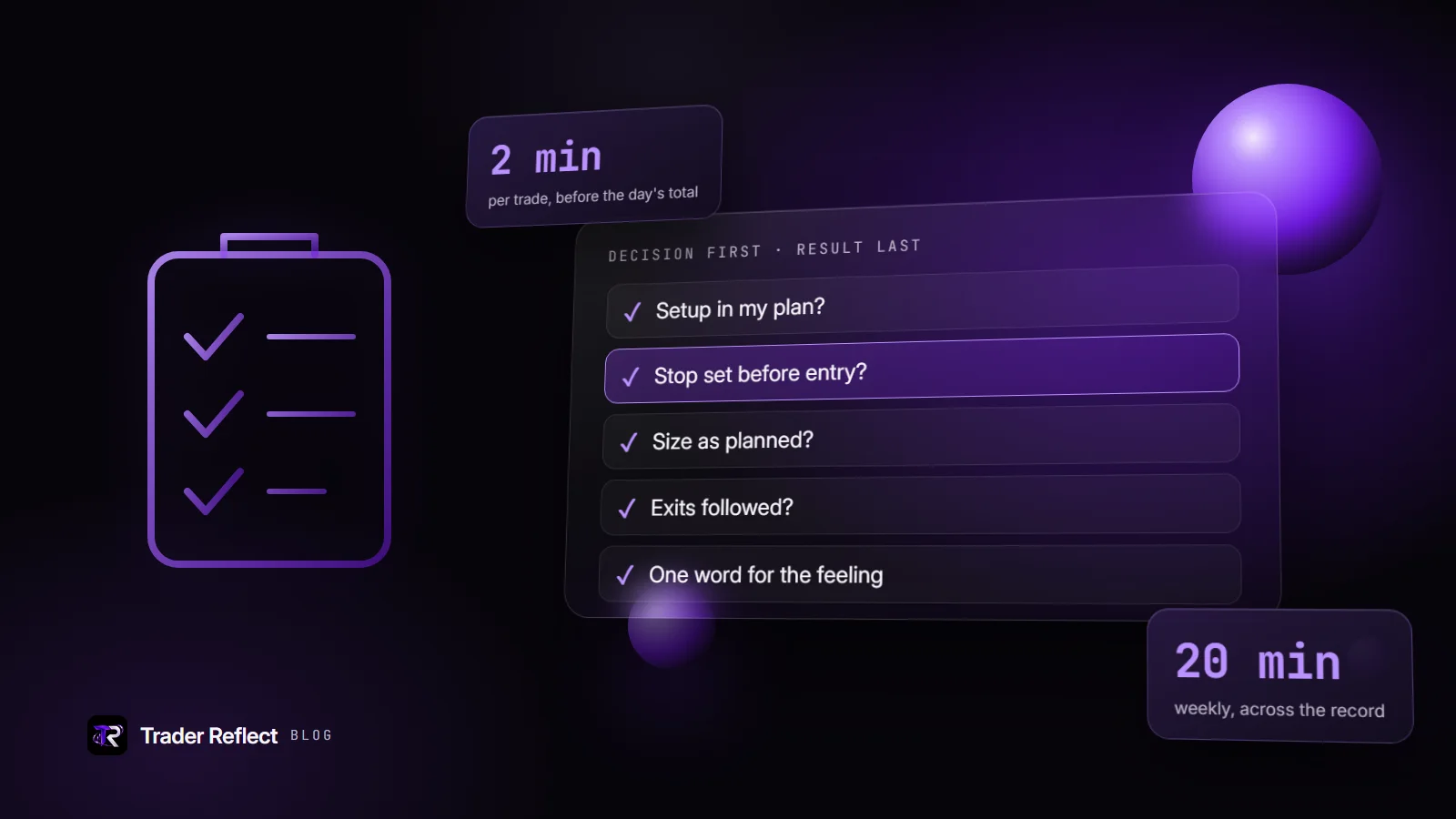
Do it right after the trade closes, before you look at your day's total. Answer yes or no where you can.
- Was this a setup in my written plan? Name it. If you cannot, the answer is no.
- Was the stop set before entry, and was it where the plan puts it? A stop moved after entry, or never placed, is a no.
- Was the size what the plan allows? Note the risk in R. Over or under the plan is a no.
- Did I follow the exit rules? Early exits out of fear and holds past the stop out of hope are both a no.
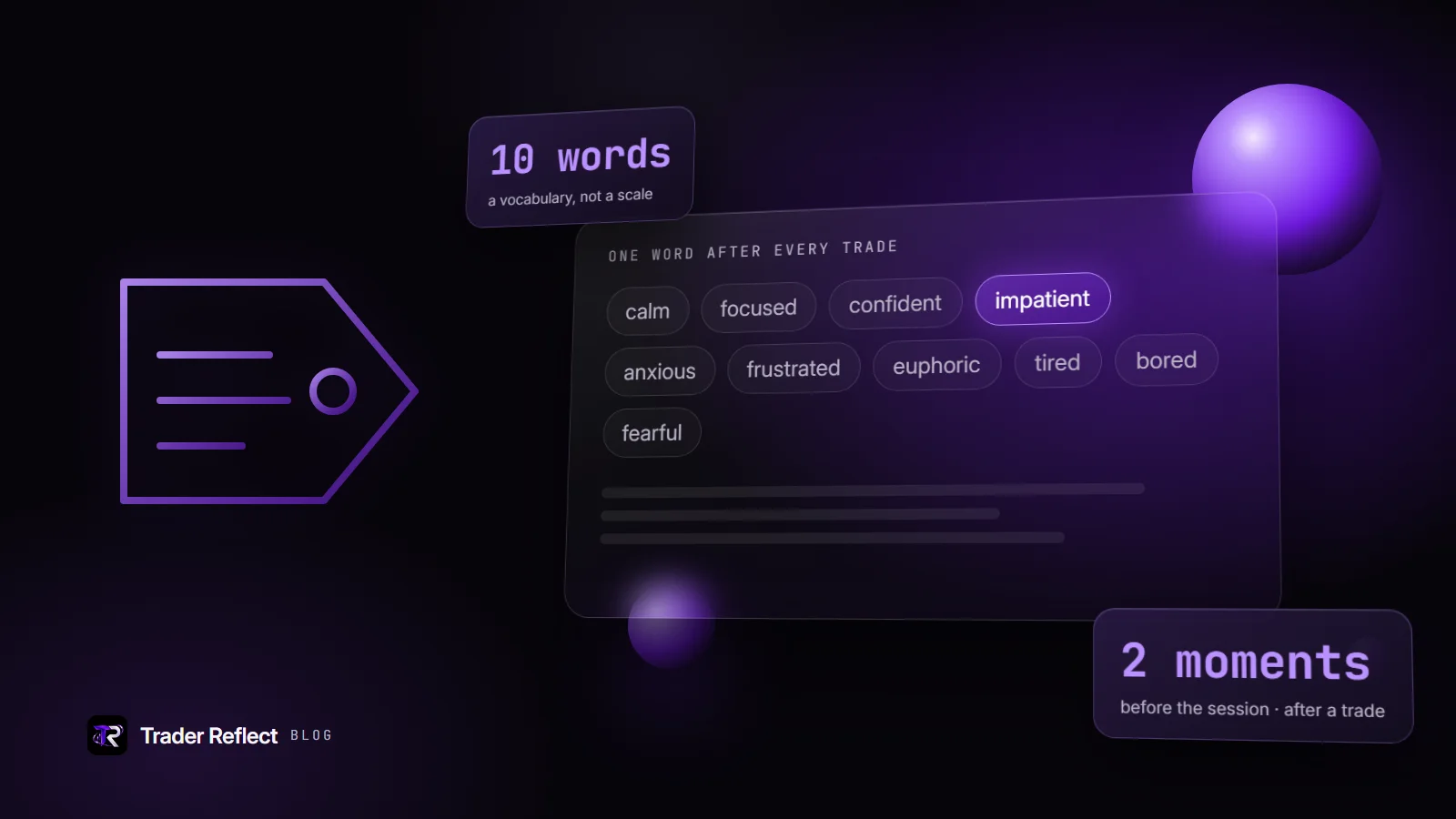
- How did I feel before the entry, in one word? Use a fixed list so the answers can be compared.
- How long since my last loss? If it was a short time, note it.
- Result in R. Only now.
- One line: what would I do differently? If the answer is nothing, write nothing.
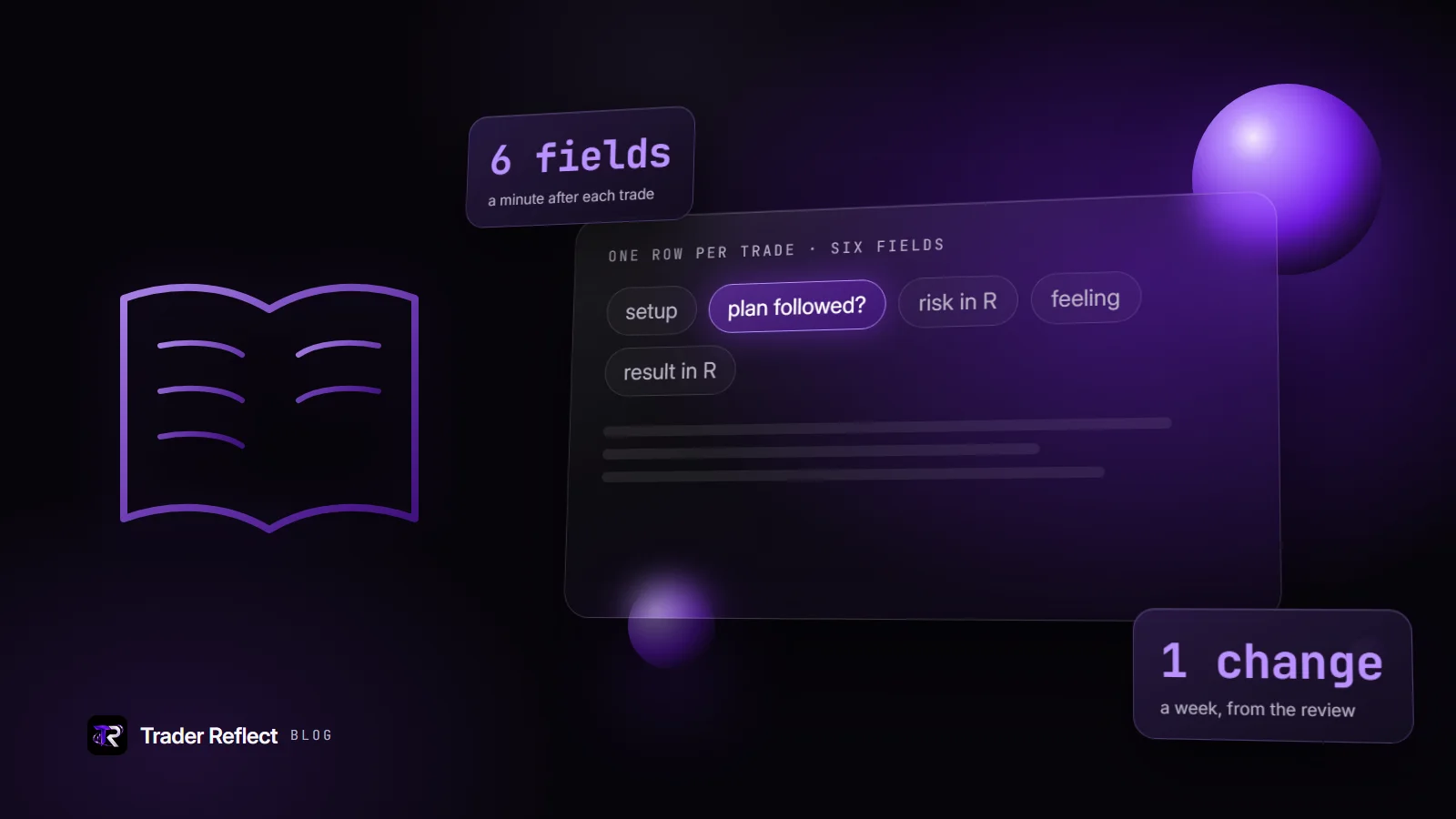
- PlanSetup, stop and size against the written plan
Each a yes or no, marked before you look at the result.
- StateOne word for how you felt, and time since the last loss
From a fixed list, so the words can be compared across trades.
- ResultResult in R, then one line
What, if anything, would you do differently? Nothing is a valid answer.
Questions one to four give you a plan-followed mark that does not depend on the result. A trade can be a yes on all four and still lose, and that is a good trade. A trade can be a no on one of them and win, and that is a bad trade with a lucky result. Recording both facts lets you see the difference later.
What to do with the answers
A single review rarely changes anything. The value comes from many reviews read together. After a week, group the entries and look at a few specific things.
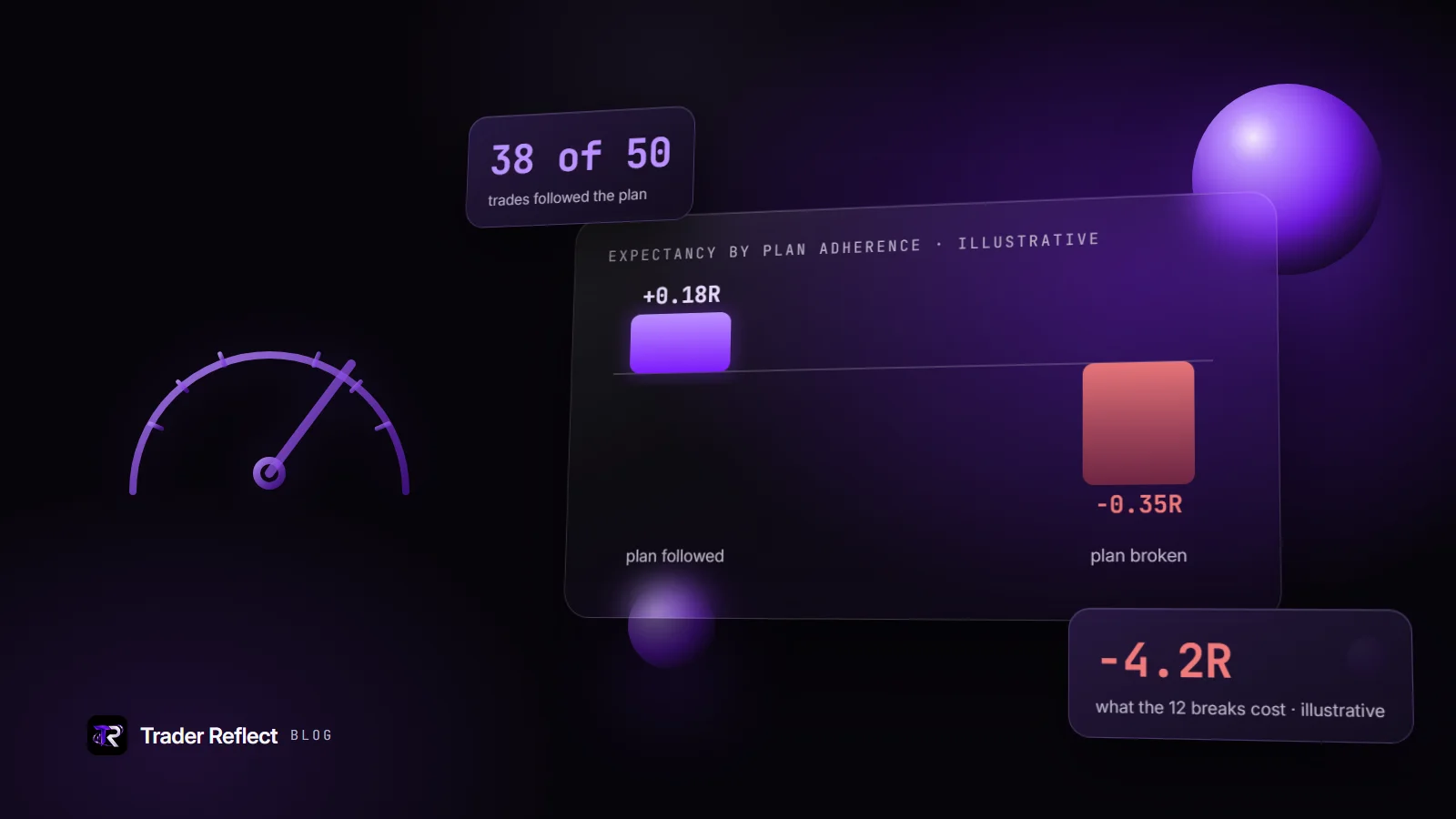
- Plan-followed rate. Followed on how many of the marked trades? This is a simple measure of discipline.
- The cost of breaking the plan. The average result in R of the not-followed trades against the followed ones.
- Which rule breaks recur. Count them. The most frequent is not always the most expensive, so also add up the R lost on each type.
- Feelings and results. The average result in R by feeling word, once each word has enough trades behind it.
- Timing. Results by hour or session, and by minutes since the last loss.
Each one is a number you can compute from a journal. If any shows a clear gap, make it the one change for next week.
The weekly review, in twenty minutes
Set a fixed time and keep it short. A reasonable order:
- Read the week's entries in sequence. The order shows how a session unfolds, which individual entries hide.
- Count. Trades taken, plan-followed rate, the number of each type of rule break.
- Find the single costliest pattern. Choose by R lost, not by how often it occurred.
- Write one if-then rule for it. A cue you will notice and a physical action.
- Check last week's rule. How many occasions did the cue come up and how often did you do what you said?
The last step is the one most people skip, and without it a review is only a record of good intentions. If you want help writing the rule, the post on if-then plans for traders works through five examples.
Keep the sample in view
A pattern in ten trades is a question, not an answer. A review will often show something striking in a small group: three losses in a row after a certain word, a bad Thursday. Before acting on it, count the trades behind the figure and keep recording. The sample size entry in the glossary explains why averages from small groups move so much, and why your win rate lies covers why the right average to track is in R.
Common ways reviews fail
- Looking at the result first. Fix: write the plan-followed marks before you check the total.
- Grading losses as mistakes. A loss within the plan is a good trade. Fix: tag behaviour, not outcome.
- Reviewing only the bad days. This biases the sample and makes every day feel like a failure. Fix: review all trades, including wins that broke the plan.
- Collecting problems. Ten findings and no change. Fix: one change a week.
- Rewriting the rules each time. If the plan changes after every loss, you cannot judge it. Fix: change rules monthly, with a written reason.
- Skipping when it is unpleasant. The unpleasant days are the useful ones. Fix: put a minimum version, even three questions, on those days.
Make it small enough to survive
The best review is the one you will actually do. If two minutes per trade is too much, start with the first four questions and the result. If the weekly review feels long, cut it to the counts and the one rule. Add depth only after the habit holds for a month. A short review done every time beats an ambitious one done in the first week.
Where Trader Reflect fits
If you log trades in the Money Circle journal, Trader Reflect does the weekly arithmetic: it compares this week with the last on behaviour, such as plan adherence and sizing, reports only changes above a noise floor, and names the one habit costing you most with the number of trades behind it. It reads the record you keep; the per-trade questions are still yours to answer. You can open Trader Reflect from your Money Circle Journal and see what membership includes. For what belongs in the journal itself, see Money Circle's piece on recording the uncomfortable part. The glossary also has a short entry on the post-trade review.
Educational content, not financial advice. Trading involves risk of loss.