A losing streak is rarely what damages an account on its own. The damage comes from what a trader does in the middle of it: sizing up to get back to even, loosening the criteria for an entry, or taking trades out of a need to act. This post is about the psychology of that stretch and a practical protocol for it, written before you need it, because the version of you in the middle of a streak is the one least able to plan.
A streak is not automatically a problem
Start with the arithmetic, because it removes some of the fear. Any strategy, even a sound one, produces runs of losses. If your win rate is around half, a run of several losses in a row is an ordinary event over enough trades. The same maths means a run of wins is ordinary too, and neither tells you much about the quality of your decisions in isolation. The glossary entry on streaks and the post on why your win rate lies cover this in more detail.
So the first question after a run of losses is not "what is wrong with me". It is "were these good decisions that lost, or bad decisions?" You can only answer that from your record: did you follow the plan on those trades? If you did, the streak is variance, and the right response is mostly to change nothing. If you did not, the streak is a symptom and the break is the thing to fix.
What the mind does after losses
Several well-described tendencies show up here, and naming them helps you notice them.
- Loss aversion. A loss feels larger than an equal gain, which pushes you toward actions that avoid realising it: moving a stop, holding a loser, or doubling up. See the entry on loss aversion.
- The urge to recover. The wish to get back to where you were treats the account as a score to be restored today. The market does not know your starting point.
- Tilt. Frustration narrows attention and speeds up decisions. The entry on tilt describes the pattern.
- Recency bias. The last few trades feel like the whole story, so you abandon a setup after a few losses or force it after a few wins.
- Avoidance. The opposite response: stopping the review, skipping the journal, and not opening the statement. It feels like rest and works like denial.
None of these is a character flaw. They are the default behaviour of a mind under mild threat. The remedy is not willpower in the moment; it is a procedure decided in advance.
- TriggerA fixed number of losses or a fixed loss in R
Chosen in advance, not judged in the moment.
- PauseAway from the screen, then a smaller size or no more trades
The size never rises after a loss.
- CheckSetup, stop and size against the plan before the next entry
Any no means no trade. Review the streak later.
A protocol to write down now
Write this when you are calm, and put it where you will see it. Edit the numbers to suit your own plan; the structure is what matters.
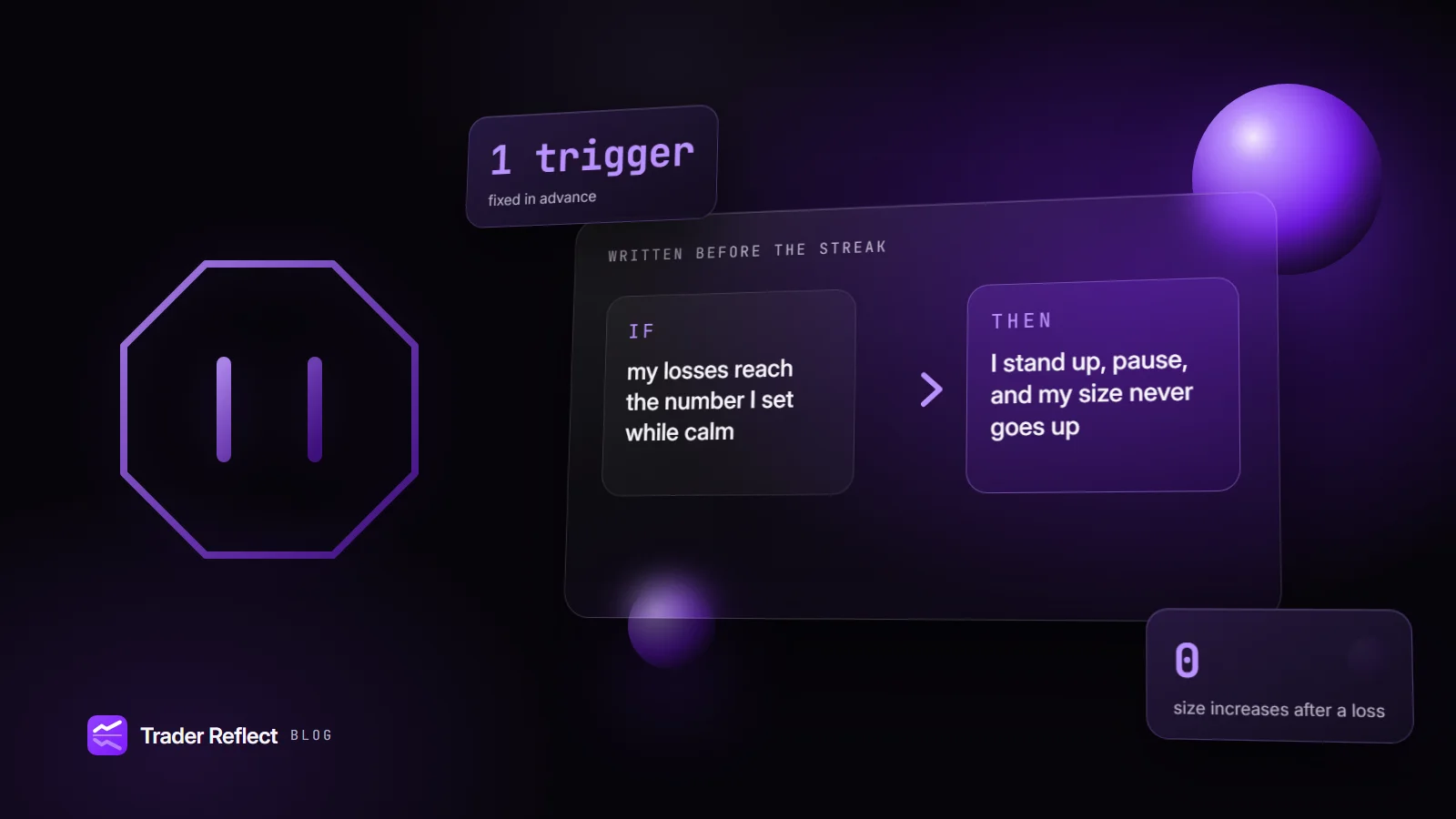
A trigger. Decide what counts as the start of the protocol: a set number of consecutive losses, or a set total loss in R in a day. Choose the numbers while calm and do not adjust them mid-session. The point of a fixed trigger is that you do not have to judge, in the moment, whether you are tilted, because tilted people are bad at judging it.
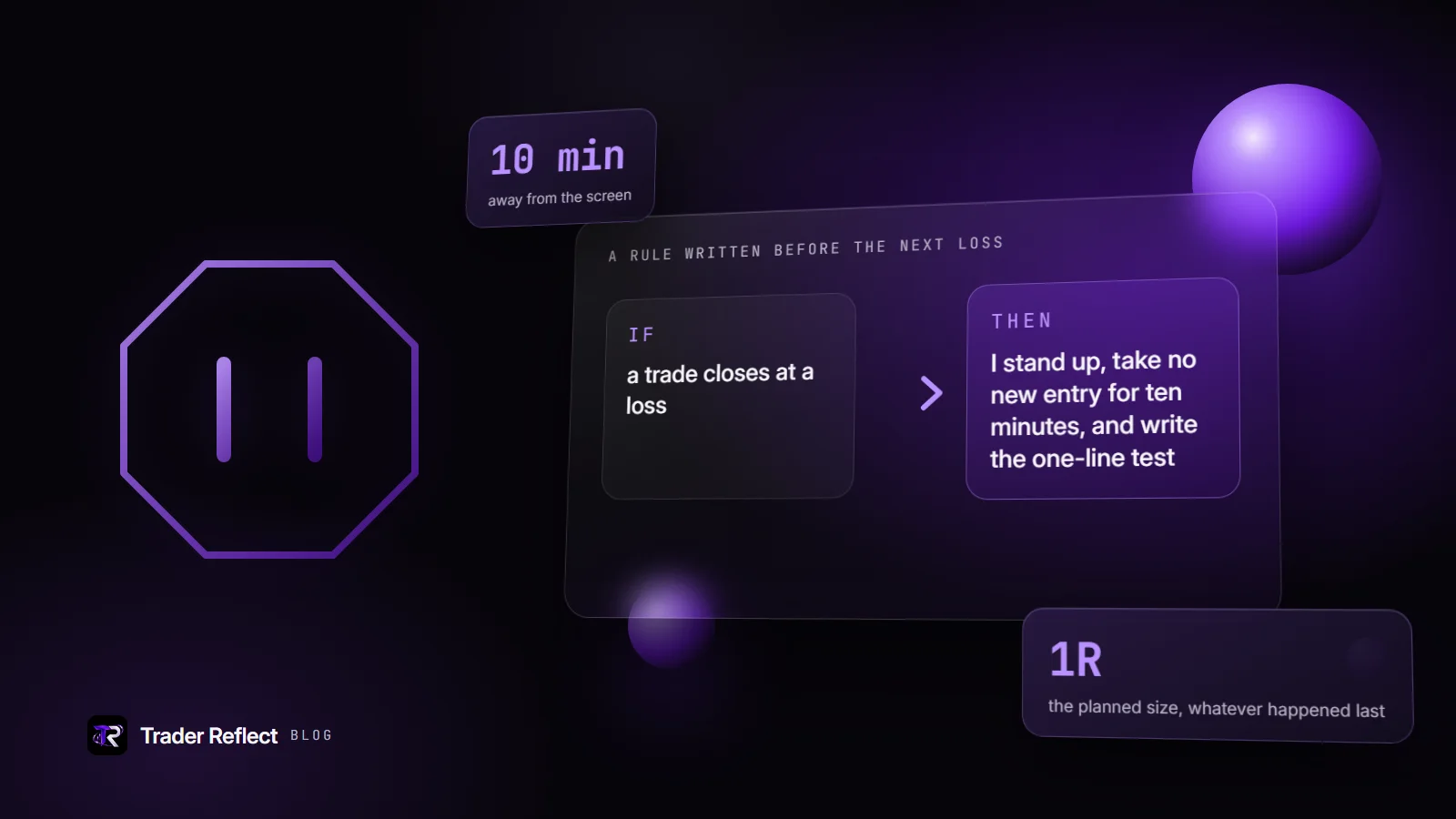
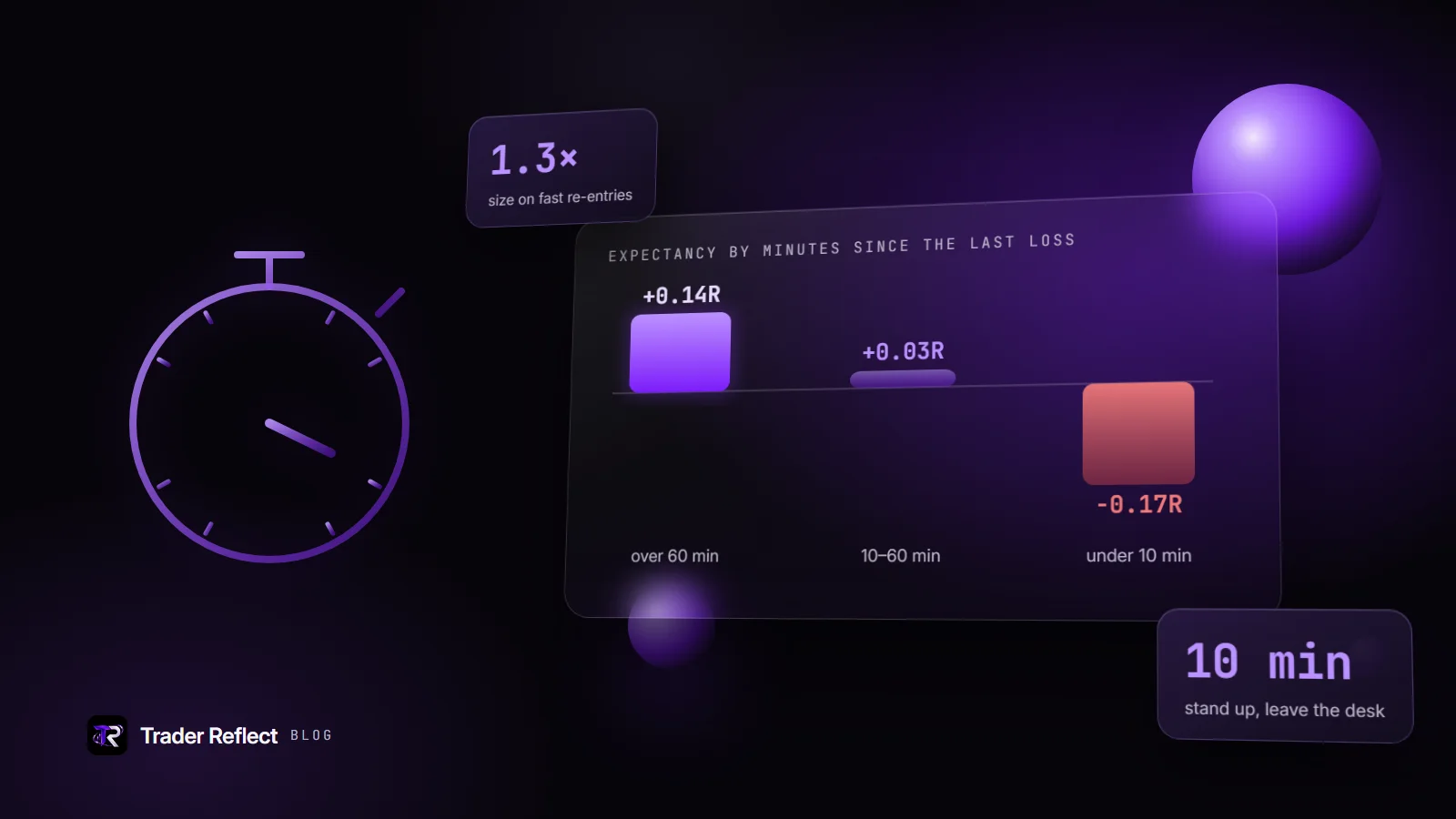
A pause. When the trigger hits, stop trading for a set time: stand up, leave the screen, do something physical. Ten minutes is the usual minimum; the rest of the session is the usual maximum. The pause is not a punishment. It separates the next decision from the last loss.
A reduced size, or no trades. For the next trades after a pause, you may decide to trade at a smaller fixed risk, such as half your normal planned risk, or to stop for the day. What you must not do is increase size. Write that line explicitly, because it is the one the urge to recover argues against hardest.
A check before the next entry. Before the first trade after the pause, answer three questions on paper: is this a setup in my plan, is the stop where the plan puts it, and is the size what the plan allows? If any answer is no, there is no trade.
A review of the streak, not during it. Do the analysis later. In the middle of a streak you will explain it to yourself in whatever way is most comfortable.
Reviewing the streak afterwards
When you are calm, go through the trades in the streak with the questions from the post-trade review checklist. For each trade mark whether the plan was followed, the risk in R, your feeling in one word, and the time since the previous loss. Then look at two things.
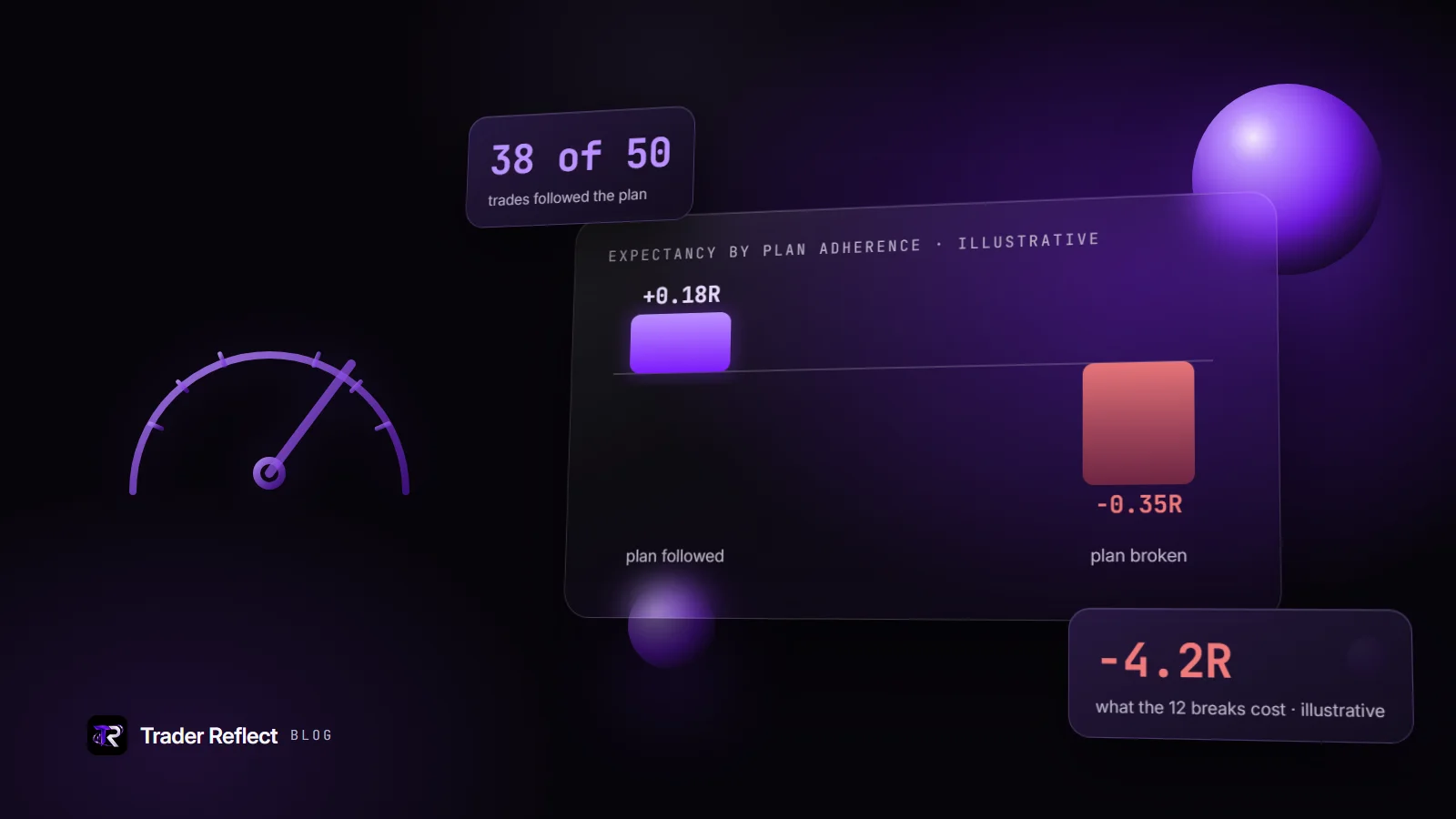
First, did you follow the plan on the trades in the streak? If the answer is yes on most of them, the streak was variance, and the most useful action is to keep going at the planned size. If the answer is no on several, count which rules broke and in what order. Often the first loss was an ordinary one and the later losses were the cost of the response, such as quick re-entries and larger size. The posts on revenge trading in your own record and how to stop revenge trading show how to measure that.
Second, what state were you in? If your journal has a logged feeling next to each trade, you can see whether the breaks clustered on one word. That tells you what to watch for next time.
Protecting the next session
Some practical points that help in the days after a rough run:
- Keep the plan, not the mood. Trade the same setups at the same size unless the review has given you a specific reason to change them.
- Sleep, food and movement are part of the process. Fatigue lowers the quality of decisions in every domain, and trading is not an exception.
- Talk to someone. An accountability partner who sees your plan-followed rate is more useful than one who sees your profit. See the entry on accountability partners.
- Reduce the number of decisions. Fewer setups, a shorter session window, a cap on trades per day.
- Do not make large changes to the strategy based on a short run. Changing a method after a handful of trades is mostly recency bias. If the review says the method itself needs changing, test that over a larger sample, not over the last week.
When it is more than a streak
If losses are accompanied by persistent anxiety, sleep loss, or the sense that trading is affecting your health, work, or relationships, that is not a trading problem to solve with a better rule. Talking to a professional is a reasonable step, and so is reducing or stopping trading while you do. The entry on burnout describes some of the signs.
Where Trader Reflect fits
If your trades are in the Money Circle journal, Trader Reflect looks at your own record for the costly responses described here, such as quick re-entries after a loss and size that rises after wins, and shows the number of trades behind each finding, so a streak is judged against your data and not against how it felt. It reads your record; the protocol is yours to write and follow. You can open Trader Reflect from your Money Circle Journal and see what membership includes. For the journaling side, Money Circle's guide to what a trading journal should record is a good companion.
Educational content, not financial advice. Trading involves risk of loss.