A daily loss limit is a number you write down in advance: the loss, measured in R, at which you stop trading for the day. Almost every trader who has thought about risk has one on paper. Far fewer follow it on the day it matters, because the moment you reach it is the moment you least want to stop. This post treats the limit as a habit to build instead of a test of willpower: how to choose the number, how to make stopping the default, and how to check in your own record whether the rule is doing its job.
Why the limit exists
A single loss is a planned cost. A bad day is different: losses stack, judgement worsens, and the next trade is often larger and less planned than the first. The limit cuts that chain at a point you chose while calm.
It protects three things. It protects the account from a day that has gone wrong. It protects your decisions, because trades taken after several losses tend to be the ones that break the plan; the post on revenge trading in your own record shows how to check this in your data. And it protects the next day, because a loss you stopped at is easier to review than one you chased.
It does not predict anything about the market, and it does not make losing trades profitable. It limits how much a bad day can cost.
Choosing the number
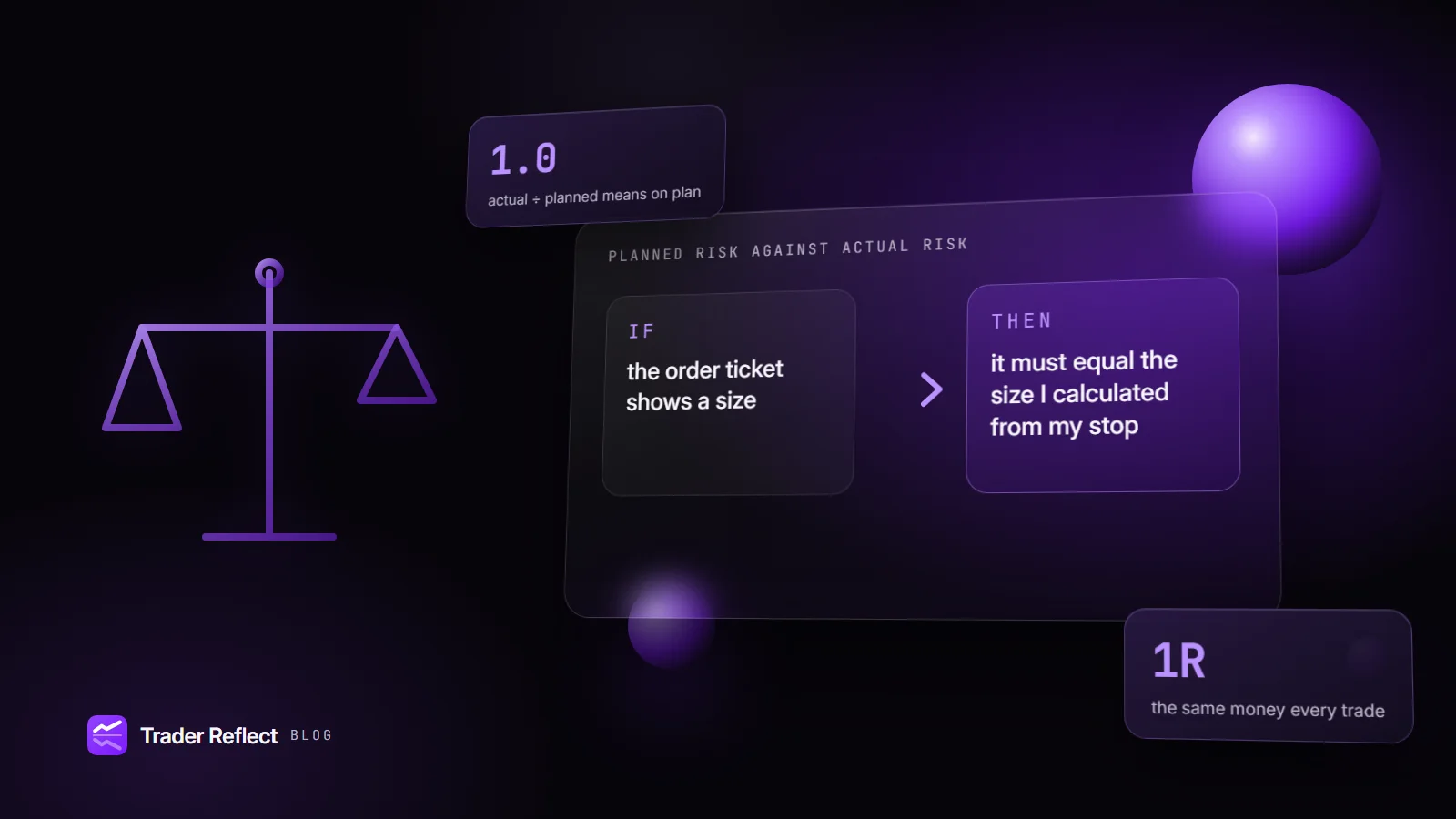
State the limit in R, the unit your plan already uses, so that it scales with your risk per trade. A few questions help you pick it:
- How many full losses can I take before my decisions change? Look at your own journal. If your entries start to loosen after the third loss, a limit of two or three R is more honest than one of six.
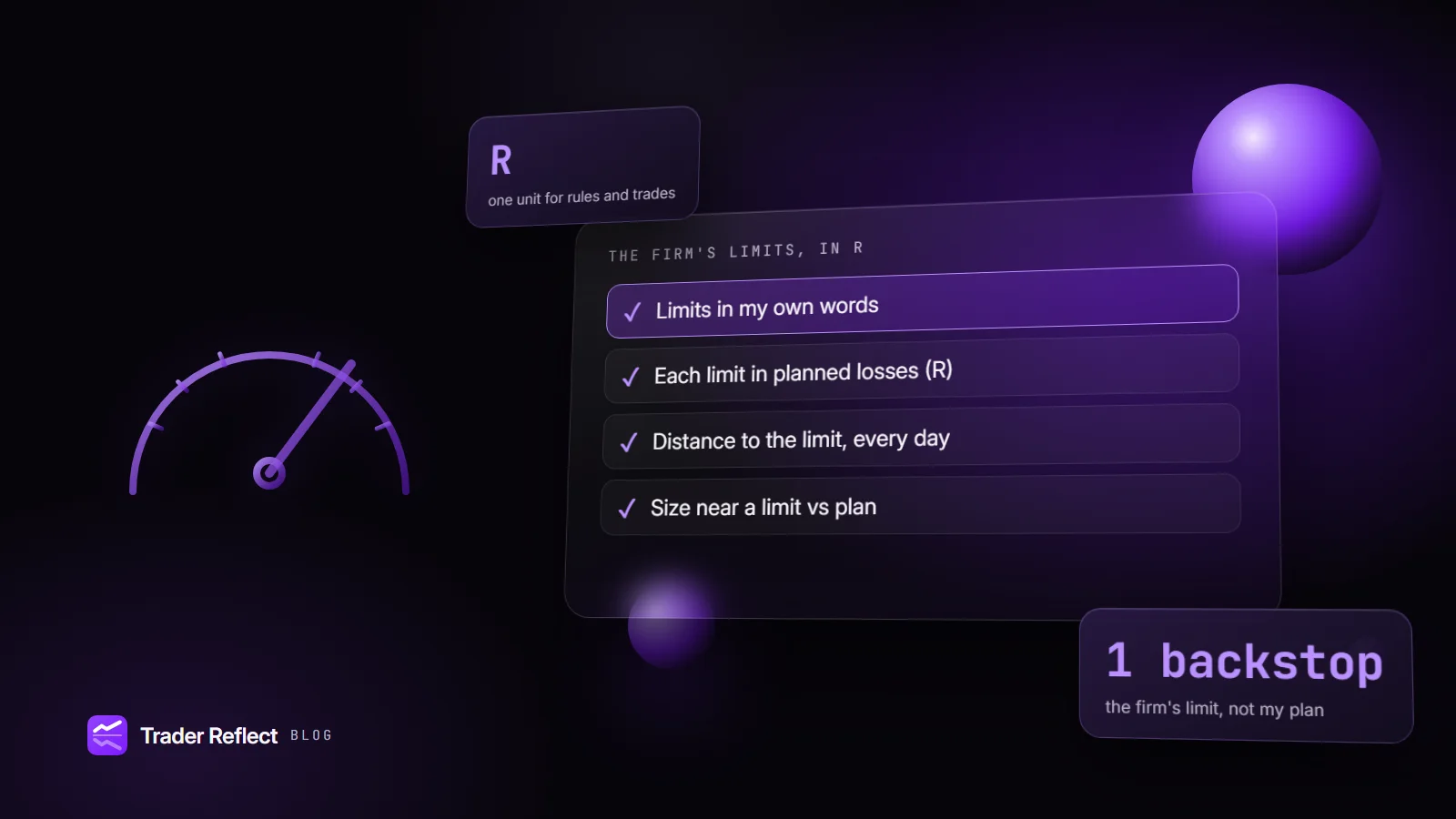
- What do the rules above me say? If you trade under external limits, such as a prop firm's daily loss rule, your personal limit should sit well inside them. See reviewing trades against prop-firm rules for turning those limits into R.
- What does one bad day do to the month? The drawdown entry explains why recovering from a loss takes a larger gain than the loss itself.
There is no universal number. What matters is that it is written, in R, before the session, and that it is smaller than the loss that would change how you feel about trading.
Make stopping the default
A limit that depends on a decision at the moment of stress will often fail. The habit is built by removing the decision.
Put it in the pre-market routine. Write the limit on the same page where you write your risk per trade and your maximum number of trades. The post on building a pre-market routine shows where it fits. Reading it each morning turns it into a fact of the day.
Track it as you go. Keep a running total in R in a place you can see. If you have to calculate it in your head when you are annoyed, you will round it in your favour.
Decide the action, not just the number. "I stop" is vague. Write what stopping means: no new entries, existing positions keep their original stops, the platform is closed, and you write the journal entry for the day. The closing of the platform is the useful part, since it adds a small physical step between you and the next click.
Use an if-then line. If my running total reaches the limit, then I close the platform and write the day's entry. The post on if-then plans explains why a specific trigger and a specific action beat good intentions.
Make the cost of breaking it visible. If you break the limit, log it as a plan breach, with the extra loss in R. Seeing the cost in your own record is more convincing than any rule.
What the record can tell you
After you have been using the limit for a while, compare days. You do not need many fields: the day's result in R, whether the limit was reached, and what you did next.
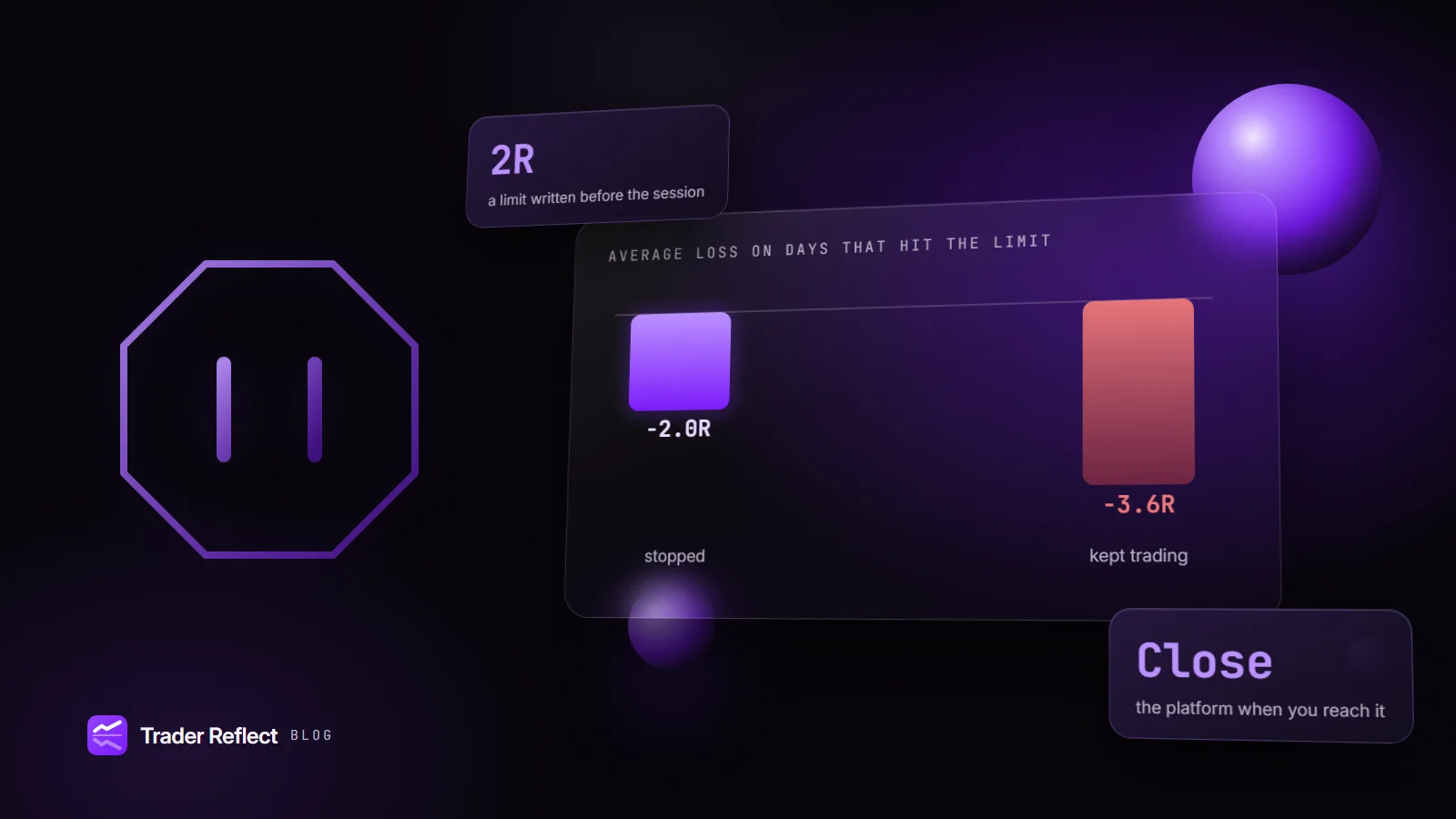
The figure shows an illustrative example, not real data: on days where the limit was reached and the trader stopped, the average loss was about the limit. On days where the limit was reached and the trader kept trading, the average loss was much larger. If your own record shows a similar gap, that is your best argument for the habit, and it is far more persuasive than anything written here.
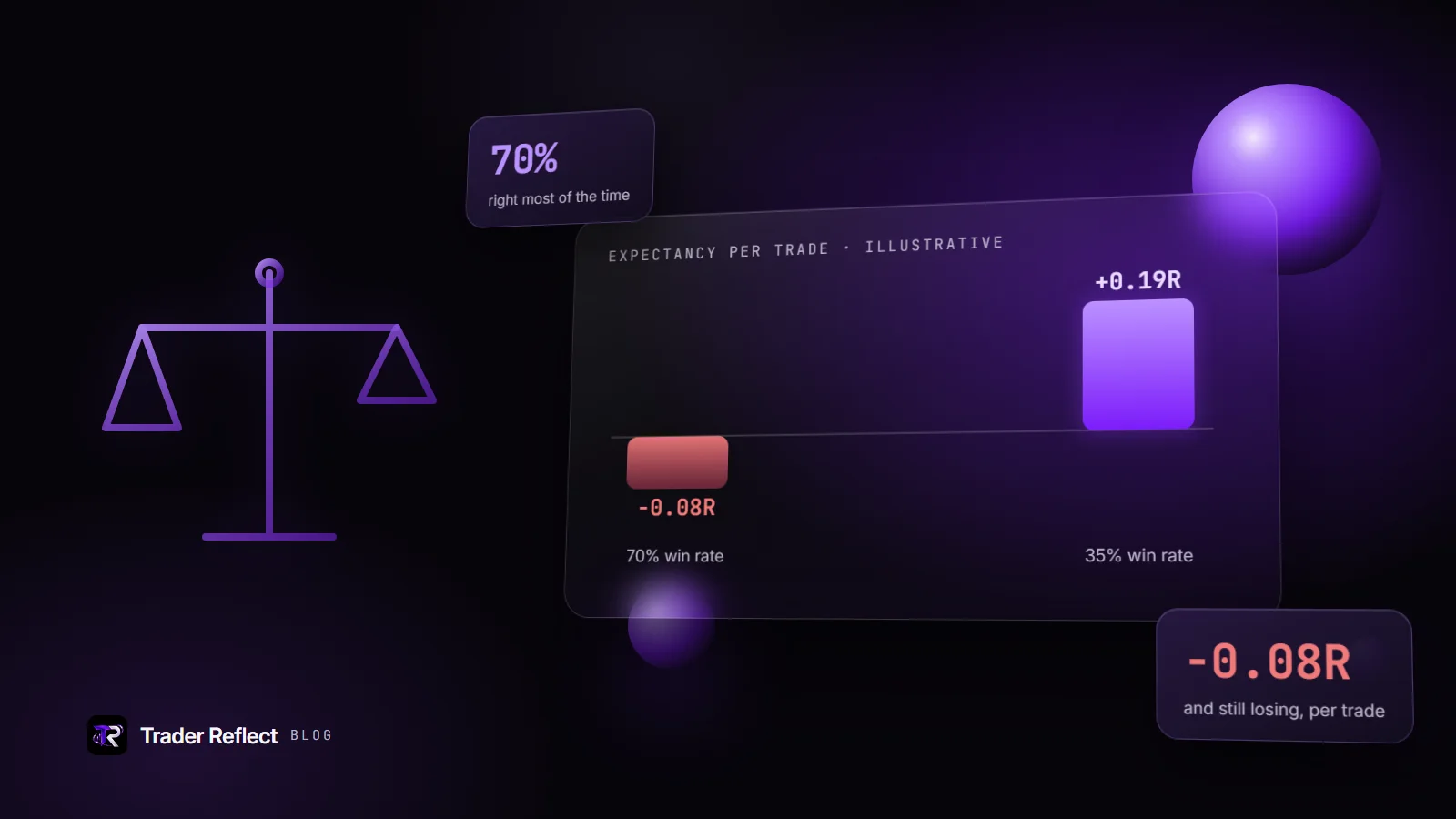
Be careful with small numbers. A handful of limit days is a small sample, and one terrible day can swing an average. The entry on sample size explains how much to trust a count, and variance is a reminder that results move around even when the process is sound.
When you reach the limit
Reaching the limit is not a failure of the day; it is the rule working. Some practical notes:
- Do not trade the next setup "just to see". A paper or note-only trade is fine as a record of what you would have done. A live one is not.
- Write the entry before anything else. What happened, which trades were on plan, which were not, and your one-word feeling. The post on the post-trade review checklist gives you the questions.
- Avoid a recovery plan for tomorrow. Resolving to make it back is how larger sizes begin. Tomorrow starts with the same plan.
- Look at the sequence. Was the limit reached by three planned losses, or by one planned loss and two impulsive ones? The first is variance. The second is a habit to work on.
Common ways it fails
- A number too tight to survive normal variance. If you hit the limit every other day on planned trades alone, the number or the risk per trade needs a rethink.
- A number too loose to matter. If reaching it would end your month, it is a catastrophe rule, not a daily limit.
- Moving it after a bad day. A limit raised in the moment is no limit. Change it only in the weekly review, never mid-session.
- Counting only closed trades. If open positions can lose more, decide in advance how they count.
- No consequence for breaking it. A rule with no cost to breach is a suggestion.
Where Trader Reflect fits
Trader Reflect reads your trade record and names the habit that costs you most, with the number of trades behind it. If the finding is that days which pass your limit run on, a daily loss rule written as an if-then line is a natural first change. The rule and the decision to follow it remain yours. You can open Trader Reflect from your Money Circle Journal and see what membership includes. For the position sizing that feeds the number in R, ChartViews AI's guide to position sizing basics is a good companion.
Educational content, not financial advice. Trading involves risk of loss.