Fear of missing out is the pull to enter because a market is moving without you, not because a setup on your plan has appeared. Every trader knows the feeling: a candle runs, the price you wanted is gone, and a late entry seems better than nothing. This post looks at what chasing looks like in a trade record, how to measure what it costs you in R, and how to write a rule that handles the next one before it arrives.
What FOMO looks like in practice
The glossary entry on FOMO describes it as entering to avoid missing a move. In your own record it tends to leave marks that are easy to list:
- The entry is far from the planned trigger. The plan said to enter at a level or a condition, and the trade went in well after it.
- The stop is wider than the plan allows, or placed wherever the chart allowed, since the natural stop is now far away.
- The size is unchanged, so the risk in R is larger, or the size is cut and the position is too small to matter, which feeds the next urge.
- The reason is missing. The journal entry says "was moving" or "had to be in".
- The feeling label is a hurry word: anxious, impatient, excited.
None of these proves a trade was a mistake. Some late entries work. The point is to separate them from planned entries and see what the pattern costs.
Why the late entry is structurally worse
A planned entry has a defined stop and target. A chase takes the price the market gives you, which is usually after the move has run. That changes the arithmetic in two ways even before emotion enters.
First, the distance to the logical stop grows, so the same money at risk buys a smaller position, or the same position risks more. Second, the distance to the target shrinks, since part of the move has already happened. The risk-to-reward gets worse on both sides. If you never write down the planned and actual values, the damage hides in the average.
The post on checking position size and risk per trade shows how to compare planned and actual risk, which is the first step.
Measuring it in your record
You need two fields beyond the usual ones: the planned entry (the level or condition from your plan) and the actual entry. From them, compute the gap and sort your trades.
- Define "late". Choose a rule written before you look, for example: more than a set fraction of the planned stop distance beyond the planned entry. The fraction is yours; the important part is that you fix it before sorting.
- Split the trades. Planned entries on one side, late entries on the other.
- Compare expectancy in R for each group, along with the count in each. The entry on expectancy explains the calculation.
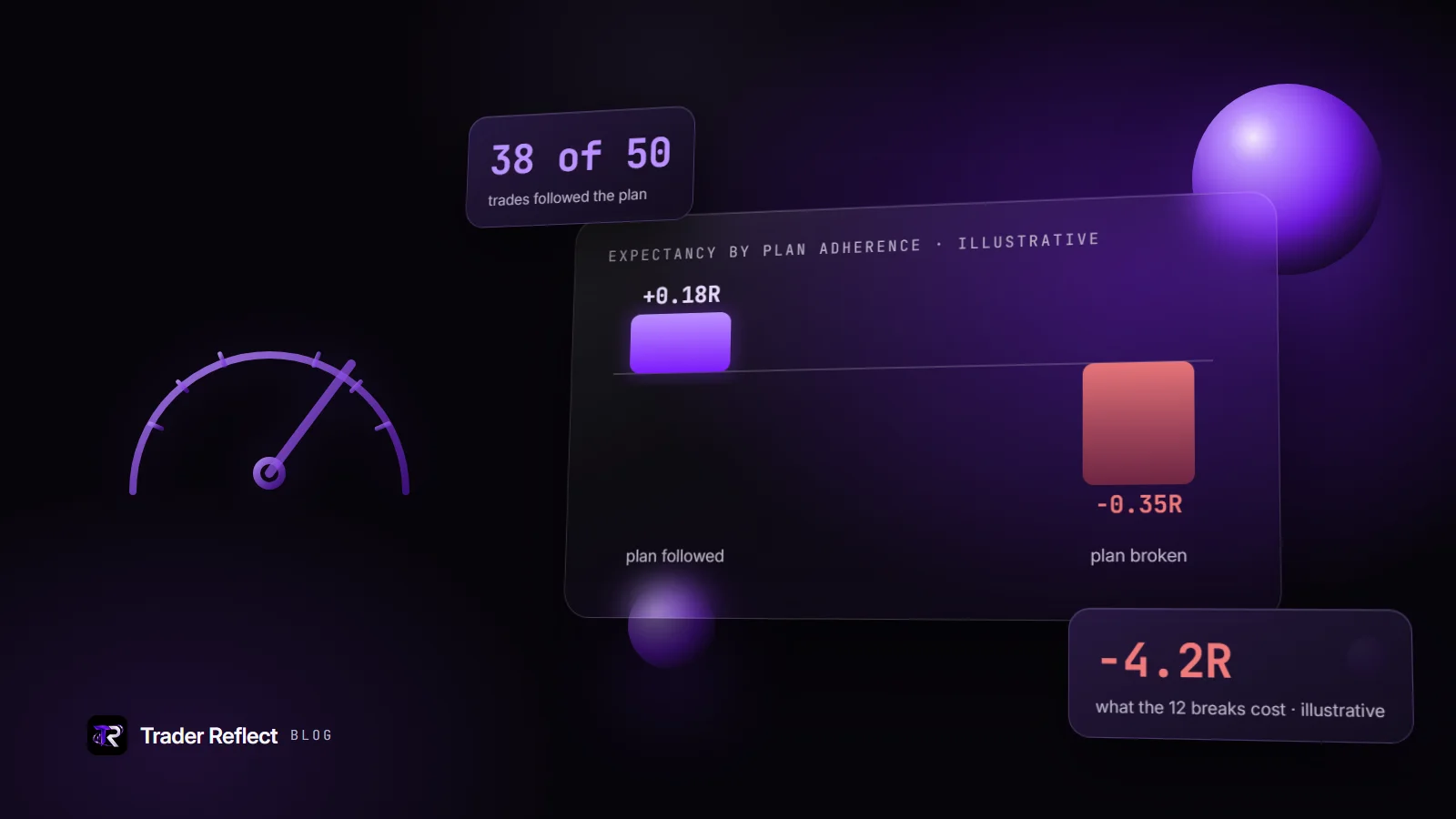
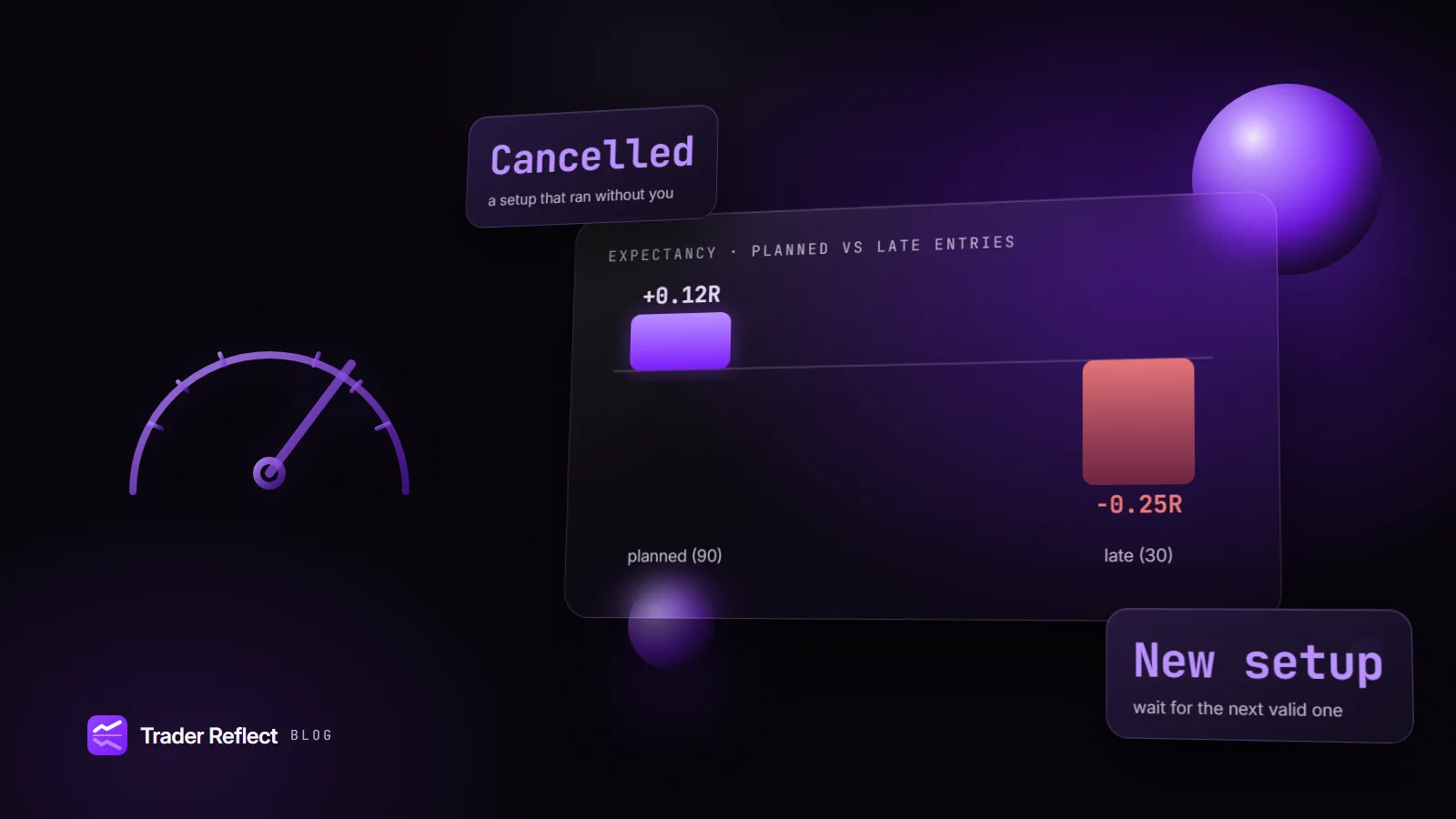
The figure shows an illustrative example, not real data: 120 trades, of which 90 entered at the planned trigger and 30 entered late. The planned group averaged a small positive result in R, and the late group a negative one. Your numbers will differ, and may even point the other way, which is useful too.
Read the comparison with care. Thirty trades is a modest sample, and a few large losers can drive an average. The entry on sample size is a reminder to say how many trades sit behind a finding, and to keep collecting before you act on a small gap.
Why the urge is strong
It helps to know what you are up against, without claiming more than we know:
- A visible move feels like a decision already made by the market. The gap between the candle and your position is easy to see.
- Regret. Missing a move can feel worse than taking a loss, and that makes the late entry attractive.
- Social input. Chats and posts about a move add to the sense that everyone else is in.
- Recent results. After a streak of misses or losses, a late win seems like a repair.
None of these needs a theory. You can notice them as feelings and put a rule between them and the click. The entry on loss aversion covers one related idea, and the post on name the feeling shows a way to label the urge in one word.
A rule for the missed move
The most effective response is to decide in advance what you do when a setup runs without you. Write it down and put it in the pre-market routine.
A simple version has three lines:
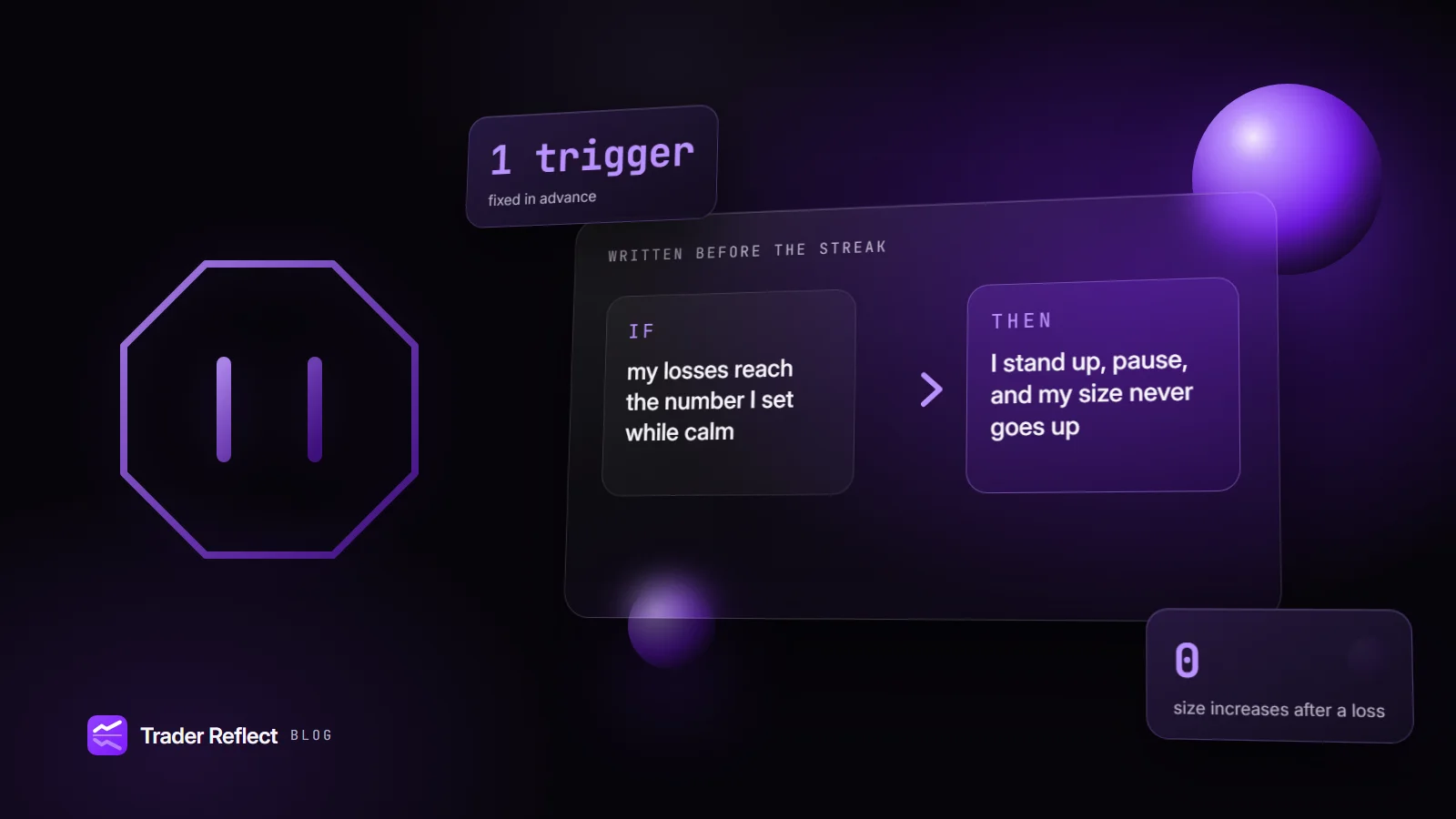
- If price has moved more than a set distance past my planned entry, then the setup is cancelled for today. The distance is a number in your plan, based on your stop distance.
- If I still want to trade it, then I wait for a new valid setup, such as a pullback to a level that meets the plan, with its own stop and size.
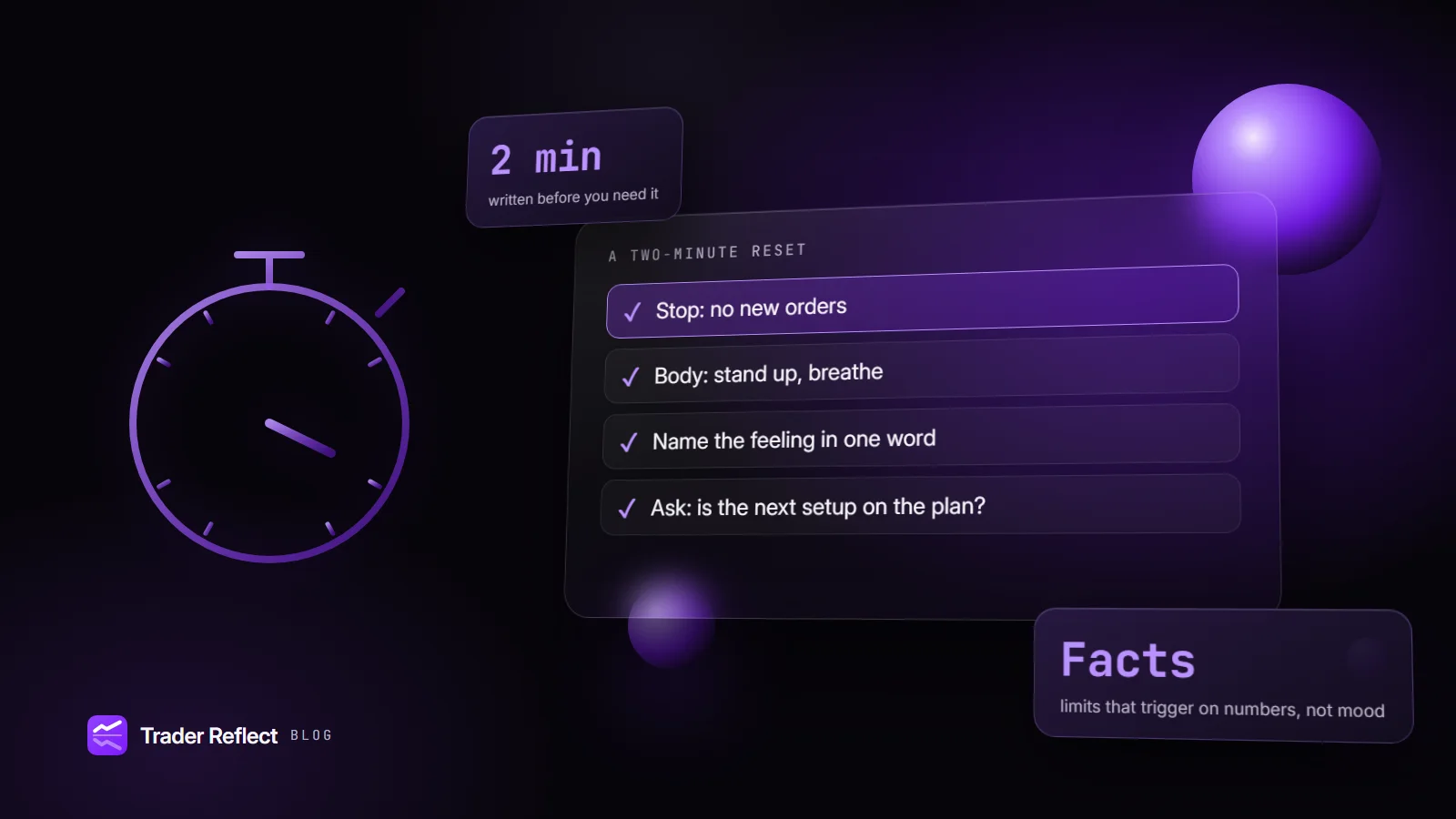
- If I feel the urge anyway, then I write it in the journal with the feeling word and take no trade for ten minutes.
The point of line one is to make "missed" a defined state instead of a feeling. A missed setup is a result, not a failure. The post on if-then plans explains why specific wording works better than "do not chase".
Handling the aftermath
If you chase and the trade goes against you, the temptation is to treat the stop as optional because the entry was already a compromise. Do not. The original stop still applies, and the loss is a planned cost of a trade that broke the plan. Log it as a plan breach with the cost in R, which turns a feeling into a number.
If you chase and the trade wins, be honest in the journal. A win from a plan breach is the most dangerous kind, since it rewards the behaviour. Label it as off-plan, and give it the same weight in the review as a loss from an off-plan trade.
What to review weekly
In your weekly review, check three things: how many trades were late entries, the average result of those trades in R compared with planned entries, and whether your missed-move rule was used. The post on reviewing your trades weekly shows a thirty-minute routine for this.
If late entries are rare and not costly, leave the rule in place and move on. If they are frequent, pick one change for the next month, not three.
Common ways this fails
- Writing "do not chase" without a distance. There is nothing to check.
- Counting every late entry as a mistake. Some work; the question is what the group costs over many trades.
- A rule that fires too late. If it only applies after the trade, it is a review, not a rule.
- Giving up the setup after one miss. Missing a move is normal, and the next valid setup does not know about it.
- Hunting for confirmation in chats. More voices rarely reduce the urge.
Where Trader Reflect fits
Trader Reflect reads your own trade record and names the habit that costs you most, with the number of trades behind it. If your finding is chasing, it can show how those trades compare with your planned ones. The decision to adopt a rule remains yours. You can open Trader Reflect from your Money Circle Journal and see what membership includes. For the chart side, ChartViews AI's guide to trade entry timing is a useful companion.
Educational content, not financial advice. Trading involves risk of loss.