Most writing about trading psychology is about the trades people should not have taken. Hesitation is the mirror image: a setup that met every rule on your plan and did not get taken. It is easy to overlook because nothing appears in the loss column. The cost is real but quiet, and it can also feed the opposite problem, since a missed setup is one of the common triggers for chasing the next one. This post looks at how to find hesitation in your own record, how to put a number on it, and how to write a rule that makes the plan, not the mood, decide.
What hesitation is
Hesitation here means skipping a setup that your written plan says to take. It is not the same as sensible caution. If a trade fails the plan, skipping it is discipline. If a trade passes every check and you skip it because the last trade lost, or because the position feels uncomfortable, that is hesitation.
Three common forms show up in a record:
- The skipped setup. The conditions were met, the entry level was reached, and no order was placed.
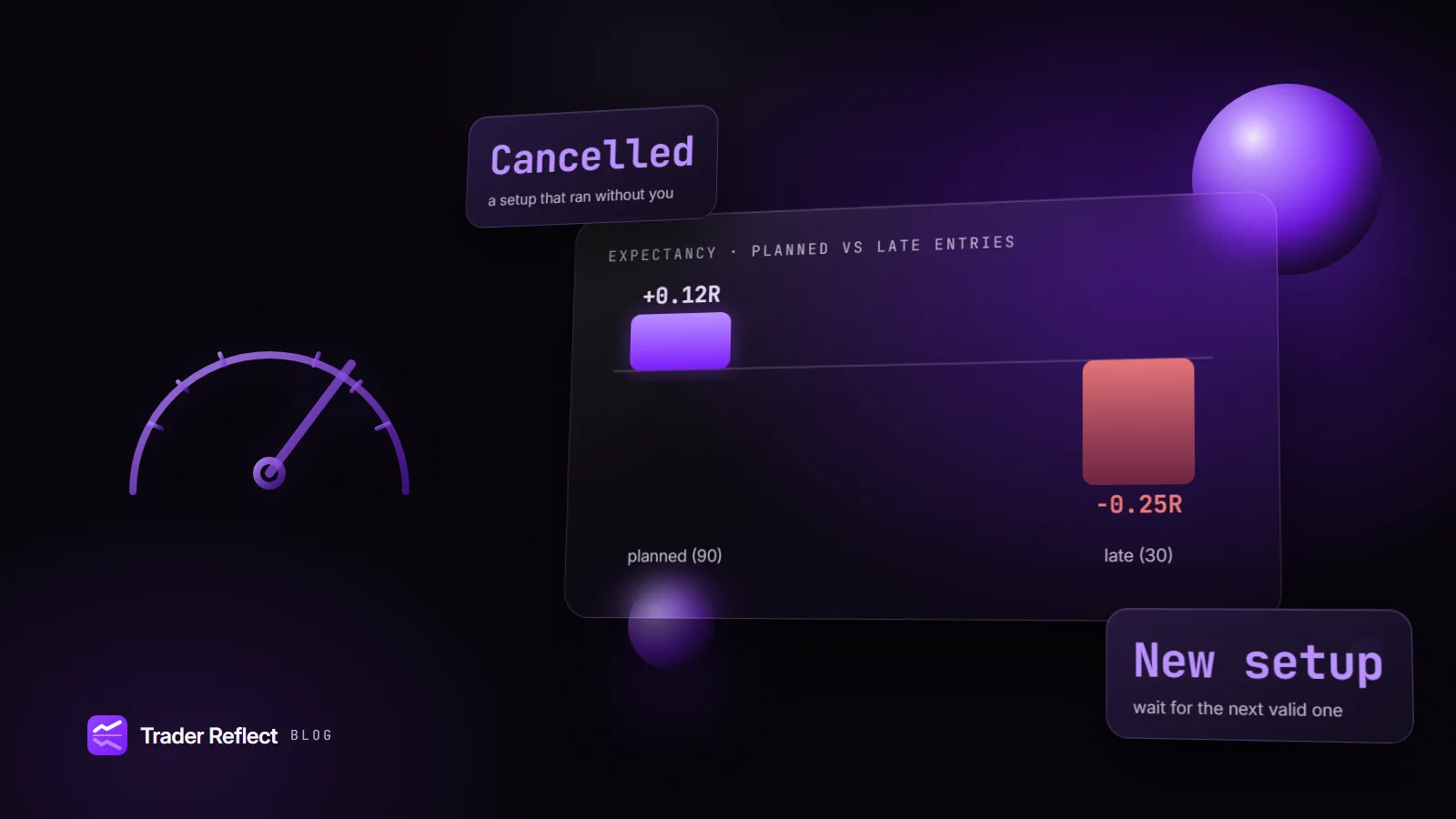
- The late order. The order was placed after the trigger, at a worse price, because of doubt.
- The early exit. A trade that was on plan was closed well before the stop or the target, out of nervousness.
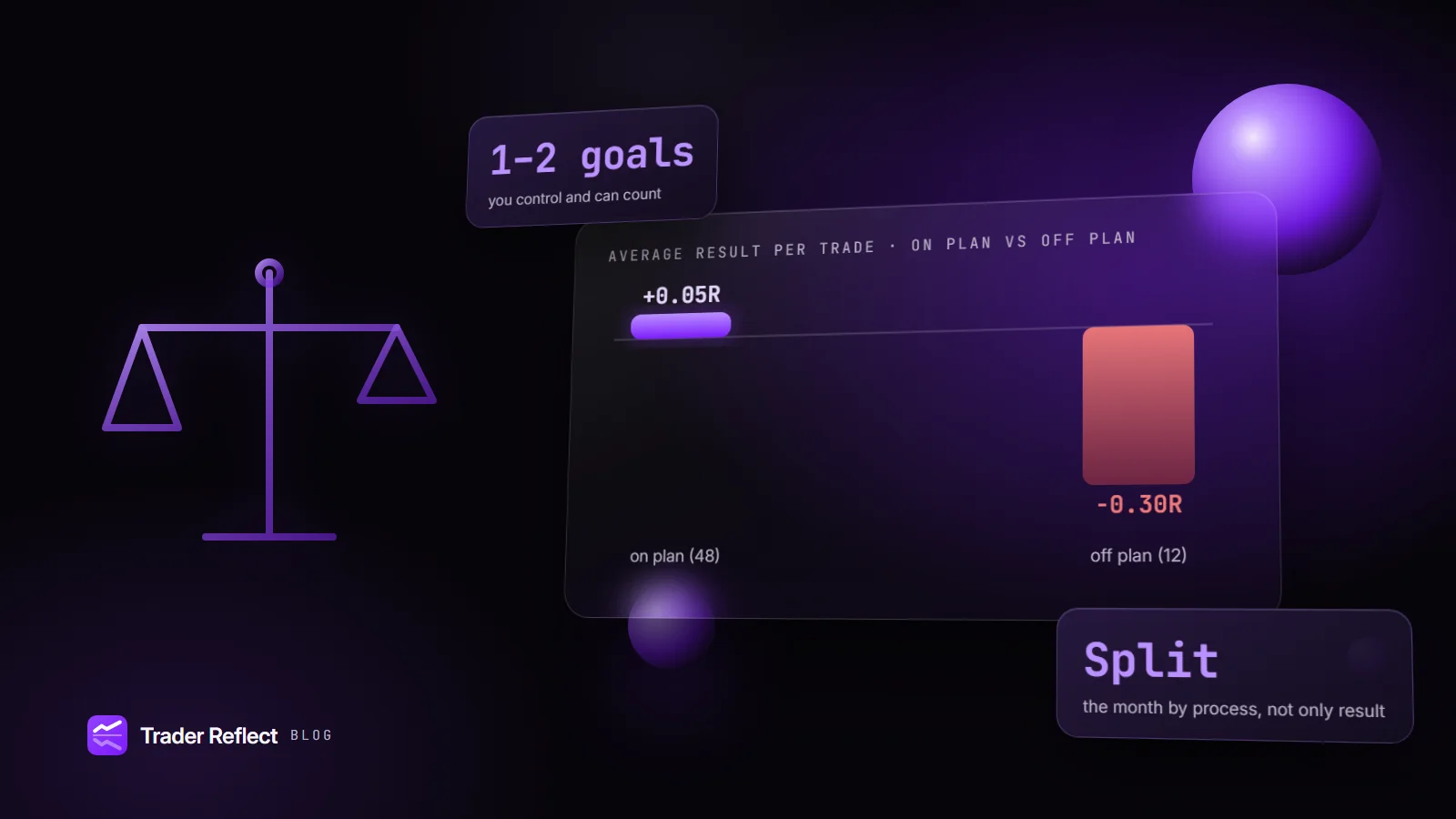
All three show up the same way: a gap between what the plan says and what the journal shows. The post on measuring discipline explains how to count plan adherence, and this is its other side.
Why it matters
Your plan was built, and ideally tested, on the assumption that you take every valid setup. If you skip some, your actual results are a different strategy from the one you tested. Two consequences follow.
First, skipped trades are not random. If you tend to skip after losses, you skip some winners while keeping the trades that feel safe, which can distort your record in ways you do not see.
Second, an expectancy built over a full set of setups is a statement about the full set. If you take only a share of them, you cannot assume the same average. The entry on expectancy describes the calculation, and edge explains why it has to be measured across all valid trades.
Finding it in your record
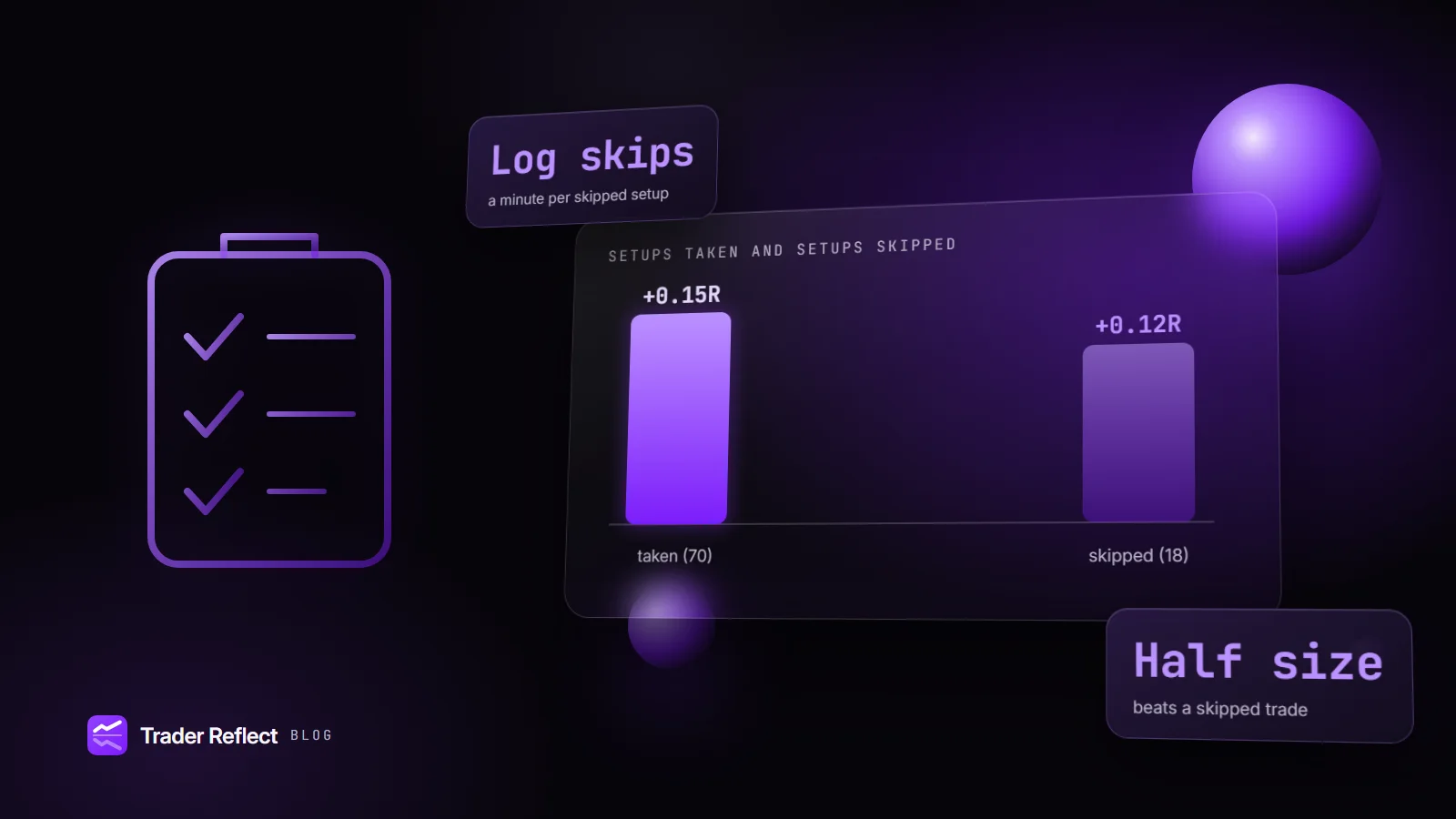
You need to log the setups you did not take, which most journals skip. Add a lightweight entry: date, the setup, why you skipped it, and your one-word feeling. It takes a minute.
Then, after the fact, replay what the plan would have done: entry, stop and exit according to the written rules, without hindsight. Record the result in R as a hypothetical. Be strict. If the rules have discretion in them, note that the replay is an estimate.
The figure shows an illustrative example, not real data: over a month, 70 valid setups were taken, with a small positive average in R, and 18 valid setups were skipped, whose rule-based replays averaged a similar result. Multiplying the skipped count by the average gives a rough cost of the hesitation in R. It is an estimate, not a measurement, and the label "hypothetical" should stay on it.
Two cautions. The sample of skipped trades is small, so say how many there are. And the replay is imperfect, because in the moment a skipped trade may have looked different from how it does with the whole chart in front of you. The entry on sample size covers the first, and honesty about discretion covers the second.
Looking for the pattern
Once you have the list, sort it by the fields you already log:
- After a loss or after a win? Hesitation after a loss is common and worth knowing.
- Time of day. Does it cluster early in the session, or late?
- Setup type. Is it one particular setup you avoid?
- Feeling. Which one-word labels show up most? See name the feeling.
- Risk in R. Did the skipped setups have larger stops, which means a smaller position or a larger loss in money?
The last point is often the answer. If you skip setups with wide stops, the issue may be the size, not the setup. A trade that makes you nervous is sometimes telling you the risk is too large for your account.
Rules that help
A rule works best if it removes the decision at the moment of doubt.
Define a valid setup as a checklist. If every item is ticked, the setup is valid. Writing the list in advance turns "does this feel right?" into "does this pass?". The post on if-then plans explains how to word the response.
If the checklist passes, then place the order at the planned level. Not a different one, not later. If you cannot place it, log why.
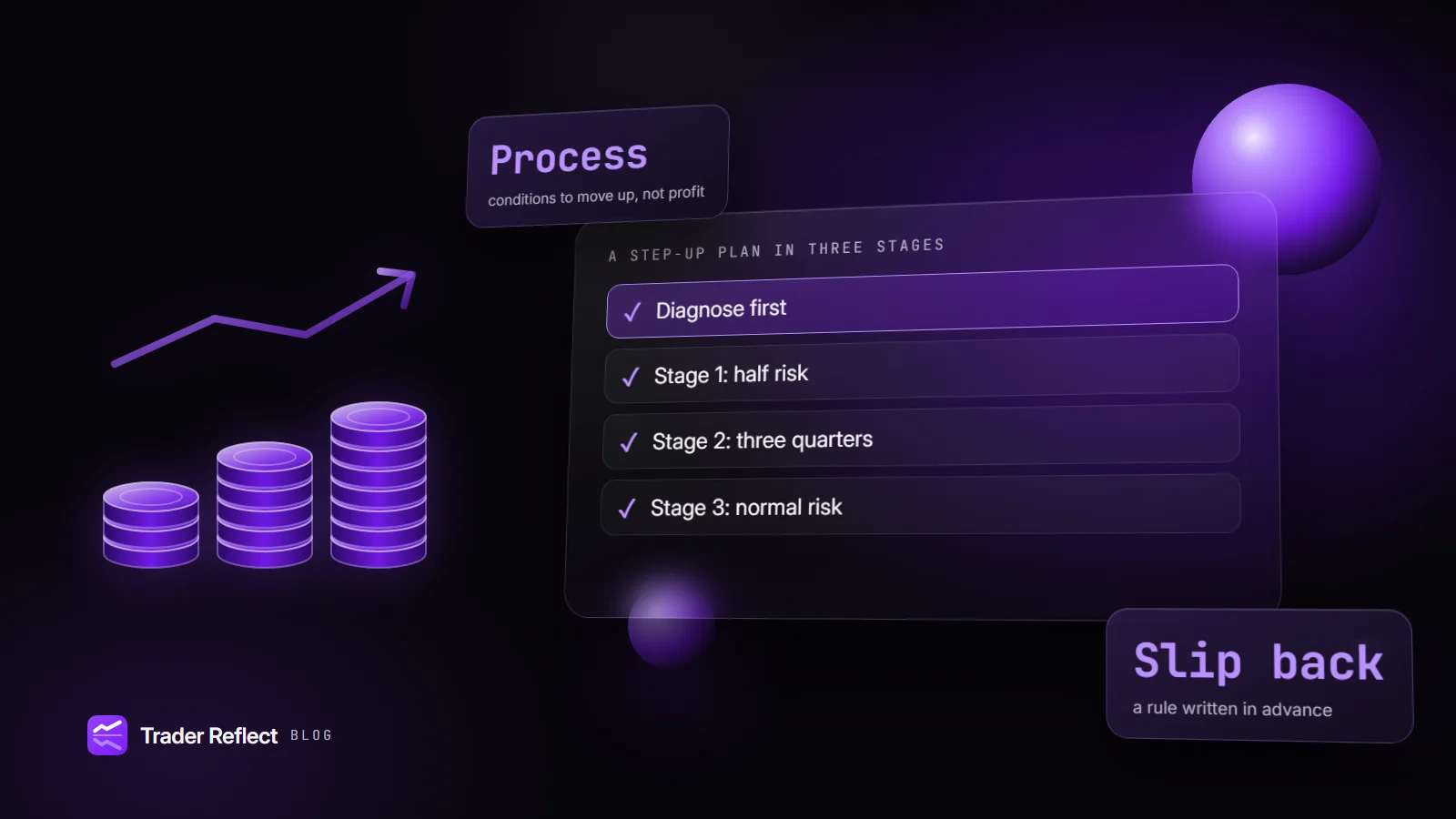
Shrink the size, not the plan. If the discomfort is about money, allow a reduced risk on days you feel off, as a written rule, and still take the trade. A half-size trade keeps the record whole, and a skipped trade breaks it. The post on building a pre-market routine has a place for this rule.
Take the first setup after a loss on schedule. If the next valid setup after a loss is the one you tend to skip, write that exact case into the plan. The post on trading psychology after a losing streak describes a protocol for the days after a run of losses.
Log the skip. Even with rules, you will sometimes skip. Log it. The record of misses is how you learn whether the rule is working.
What not to do
- Do not punish yourself for a skip. The aim is information.
- Do not chase the one you missed. A late entry creates the next problem. The urge is a separate habit; see FOMO.
- Do not remove rules to make taking trades easier. Fix the cause of the hesitation.
- Do not count hypothetical results as real ones. They are an estimate of cost, not profit or loss.
- Do not skip the review. The pattern appears over weeks, not days.
A short weekly check
Add three lines to your weekly review: how many valid setups appeared, how many were taken, and the reason given for each skip. If the gap is small, move on. If it is large, choose one rule from above and write it in your plan for the next month. The post on reviewing your trades weekly shows where it fits.
Where Trader Reflect fits
Trader Reflect reads your own trade record and names the habit that costs you most, with the number of trades behind the finding. Trades you did not take only show up if you log them, so a short note for each skipped setup makes the picture complete. What you do about it is your decision. You can open Trader Reflect from your Money Circle Journal and see what membership includes. For the journaling side, Money Circle's guide to what a trading journal should record is a useful companion.
Educational content, not financial advice. Trading involves risk of loss.